
Why I Choose Khadi Paper for My Handmade Books and Mixed Media Artwork

TRANQUIL • LUMINOUS • ROOTED
Stories from the studio, reflections on process, and the art of the handmade.
The story behind one of my favorite papers and why it has become an essential part of my creative practice.
Over the years, a few art materials have become essential to my creative practice. For me, Khadi paper is one of those materials.
Over the years I've used it in sketchbooks filled with watercolor studies, journal pages layered with collage and oil pastels, and now as the cover material for many of my handmade books. It has become one of the papers I return to most often because it feels authentic, beautiful, and capable of holding almost anything I ask it to do.
What Is Khadi Paper?
Khadi paper is a handmade, cotton rag paper produced using traditional papermaking techniques in India.
Unlike many commercial papers made from wood pulp, Khadi paper is made from 100% long-fiber cotton rag, making it exceptionally strong, durable, and absorbent. Every sheet is formed by hand, leaving subtle variations in texture and naturally deckled edges that remind you a real person crafted it.
The name Khadi also carries an important history. Originally associated with the hand-spun and hand-woven cloth that became a symbol of India's independence movement, the word has come to represent craftsmanship, sustainability, and thoughtful production.
Those qualities are exactly what drew me to the paper.

What Is Khadi Paper Used For?
One of the reasons I appreciate Khadi paper is its incredible versatility.
Artists use it for:
Watercolor painting
Sketching and drawing
Mixed media
Collage
Ink and calligraphy
Printmaking
Artist books
Bookbinding
Gouache
Acrylic painting
Digital printing
Whether you're creating loose paintings, keeping an art journal, or designing handmade books, Khadi paper offers a surface that welcomes experimentation.
Why I Use Khadi Paper
I first fell in love with Khadi paper while filling handmade sketchbooks.
I wanted a paper that could handle watercolor, graphite, collage, and oil pastels without falling apart after multiple layers. Khadi quickly became one of my favorite surfaces because it has enough strength to accept wet media while still maintaining its beautiful handmade character.
Over time, my creative journey led me to bookbinding, where I discovered the perfect way to combine my love of collage, design, and fine papers.
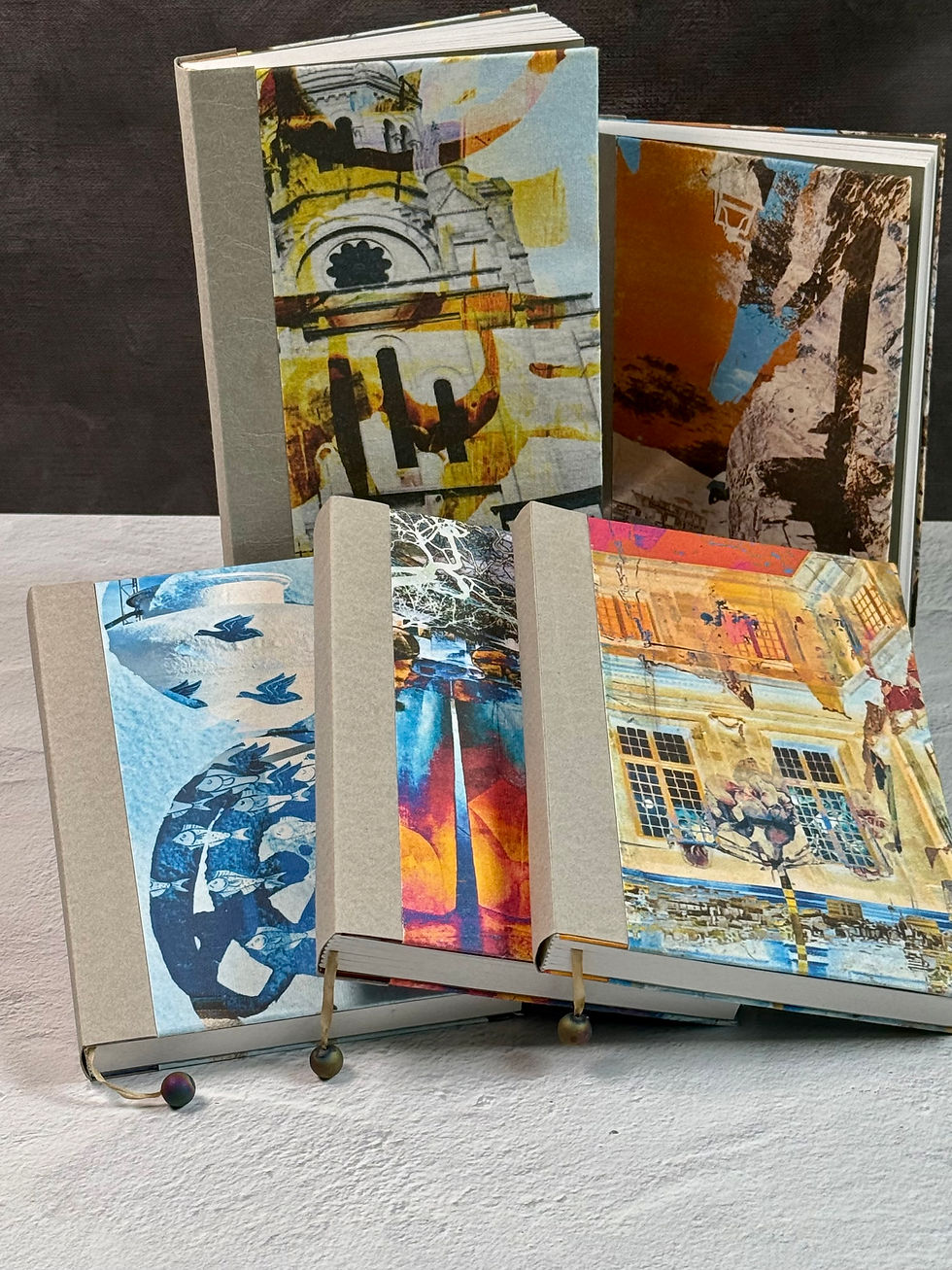
Today, Khadi paper has become an essential part of my handmade books. Many of the covers for my handmade books begin with original artwork created in my studio. Sometimes that artwork starts as a digital collage printed directly onto sheets of Khadi paper. Other times it combines paint, stains, collage, or other mixed media techniques before becoming part of the finished book. Throughout the process, Khadi paper remains the foundation, bringing warmth, texture, and a handmade character to every cover.
I've used this process throughout my Woodland collection and again in my more recent Letters From Aix series. Although each collection tells a different story, they share the same appreciation for handcrafted materials and thoughtful design.
While the artwork begins digitally, the finished books still feel unmistakably handmade. Rather than hiding the paper beneath the printed image, Khadi allows its natural texture to remain part of the finished piece.
That balance between digital design and traditional craftsmanship has become an important part of my creative process.
Letters From Aix Books The Woodland Collection of handmade books The Stillmark collection of handmade books
Printing on Khadi Paper
One question I occasionally receive is whether Khadi paper can be printed.
In my own studio, I print my original digital collages directly onto Khadi paper using an Epson WorkForce inkjet printer. I've been consistently pleased with the results. The inks reproduce rich color while allowing the paper's natural texture to remain visible beneath the printed image.
Rather than looking overly glossy or mechanical, the finished surface retains the warmth and character that first attracted me to Khadi paper.
For my handmade books, it has become the perfect bridge between digital design and traditional craftsmanship.
Choosing the Right Weight
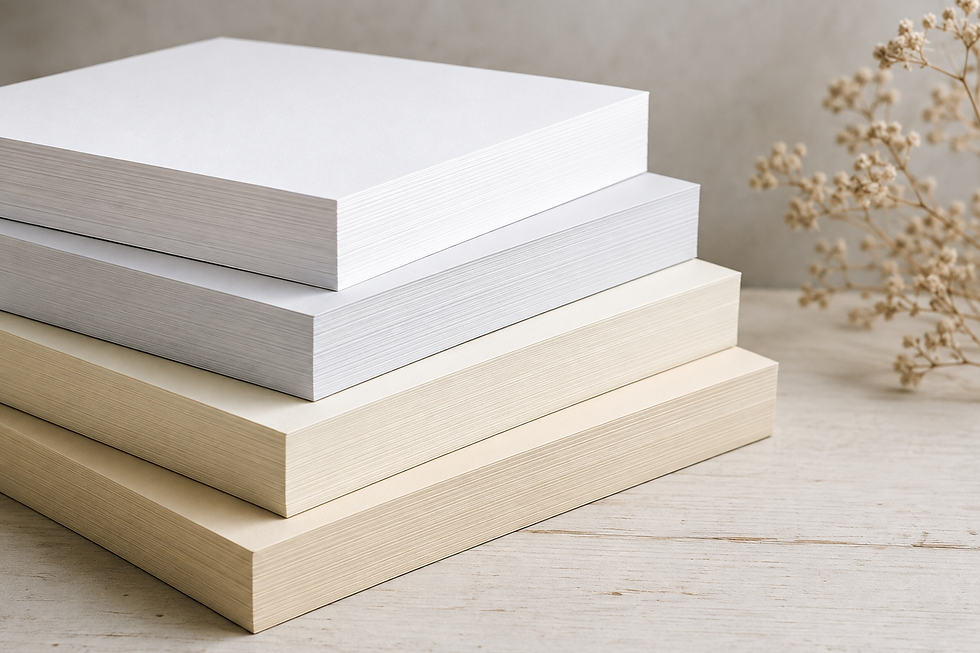
One of the things I've discovered over the years is that Khadi paper is available in a variety of weights, each with its own strengths.
Like many artists, I've experimented with several of them. At one point I accidentally ordered a heavier weight than I normally use. Rather than sending it back, I decided to work with it and quickly discovered that it was wonderful for certain applications. The heavier sheet has a substantial feel and would make an excellent surface for paintings, mixed media, or projects where a more rigid paper is desirable.
For my handmade book covers, however, I continue to prefer a slightly lighter weight. It wraps around the book boards more gracefully, folds more easily, and allows me to achieve the clean, refined finish I'm looking for without adding unnecessary bulk.
That experience reminded me that there isn't a single "best" Khadi paper, only the weight that best suits the project you're creating.
For the interior pages of my handmade books, my priorities are different. I look for papers with the right weight, grain direction, folding characteristics, and surface quality for each project. If you're interested in how I evaluate and choose papers for my books, you may also enjoy my article, Choosing Paper for Bookbinding: What I Use and Why.
Khadi Paper Khadi paper Khadi paper
Acid-Free and Archival
As artists, we all hope our work will last.
Khadi paper is manufactured using a neutral pH internal sizing, making it truly acid-free and archival. That means artwork created on the paper is far less likely to yellow, become brittle, or deteriorate over time.
When I'm creating handmade books that I hope will become part of someone's personal library, archival materials matter.
Handmade from Beginning to End
One of the things I appreciate most about Khadi paper is the story behind every sheet.
The paper is made from recycled cotton fibers rather than wood pulp. Those fibers are beaten into pulp before each sheet is formed by hand using traditional wooden moulds and deckles. The soft deckled edges aren't manufactured, they're simply the natural result of the handmade process.
After pressing and drying, each sheet is surface-sized with gelatin, creating a durable surface that performs beautifully with both wet and dry media.
No two sheets are exactly alike.
That individuality is something I value both as a mixed media artist and as a bookbinder.

Supporting Traditional Craftsmanship
As someone who makes every book by hand, I find it meaningful to work with materials that are also created by skilled craftspeople.
Khadi Papers partners with traditional paper mills in India, helping preserve generations of papermaking knowledge while providing employment within local communities. The company also emphasizes sustainability by using recycled cotton fibers instead of wood pulp and continually working to reduce its environmental footprint.
There's something satisfying about building handmade books from materials that were themselves made by hand.
Final Thoughts
Artists spend years discovering materials they truly connect with.
For me, Khadi paper has become one of those trusted companions.
Whether I'm filling the pages of an art journal, experimenting with watercolor and collage, or creating the covers for my handmade books, it consistently reminds me why I love handmade materials in the first place.
There are papers you use, and there are papers that become part of the work itself. Khadi is one of those papers for me.
If you enjoy learning about the materials behind handmade books, I occasionally share new work, studio stories, behind-the-scenes glimpses of my creative process, and early previews of upcoming collections in my newsletter.
From handmade papers and bookbinding materials to new artist books, house forms, and works in progress, you'll be among the first to see what's taking shape in my studio.
If that sounds like something you'd enjoy, you're warmly invited to join the list.
You can sign up on my website at melaniegrantdesign.com.
Rooted in place • Shaped by hand • Becoming what feels true
Melanie Grant — Northern Idaho


Comments